

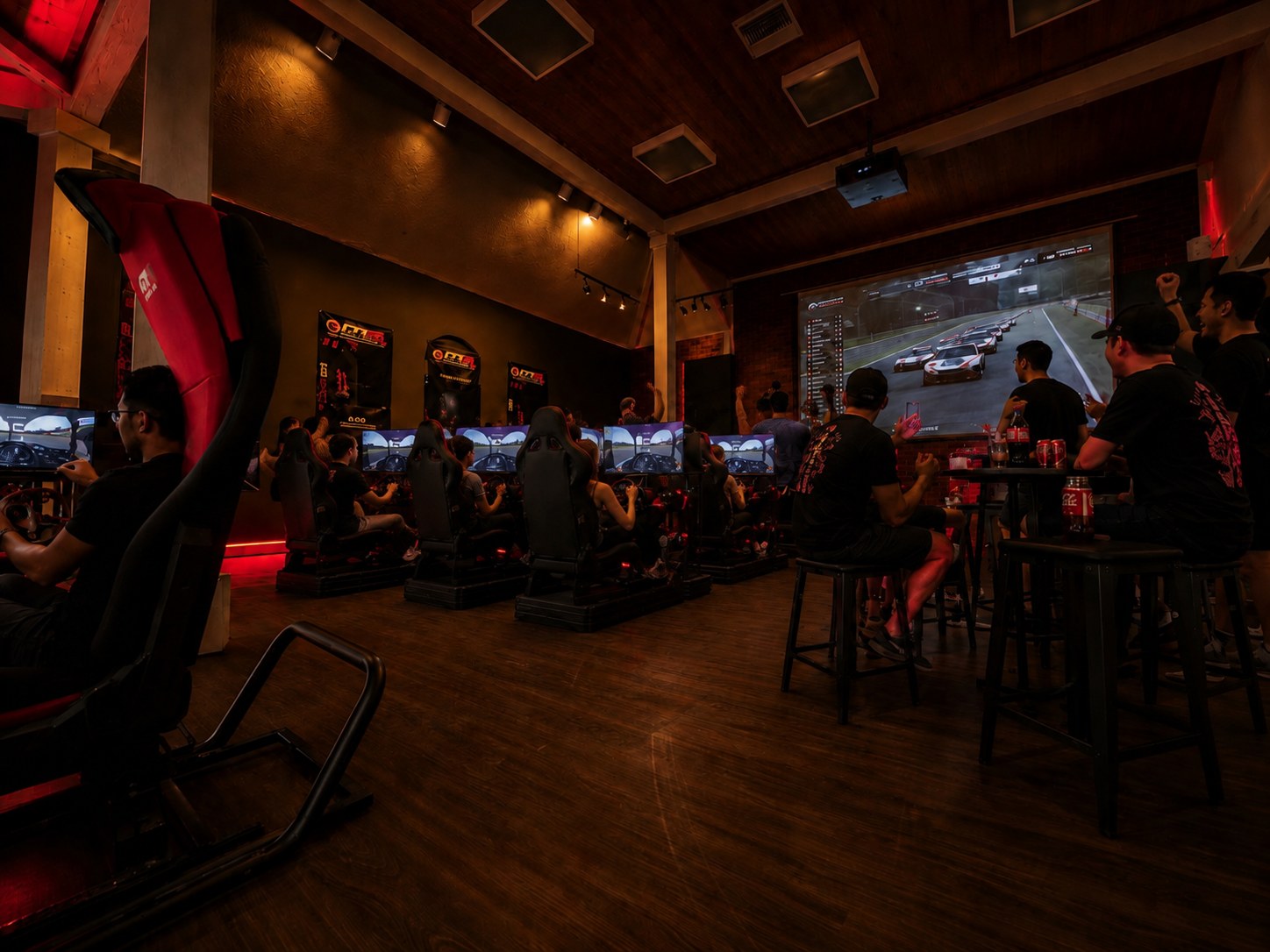
The fastest way to ruin a promising sim racing setup is simple - put great hardware on a cockpit that cannot keep up. A formula gt adjustable simulator cockpit changes that equation by giving you the driving position, rigidity, and tuning range needed to make every lap feel deliberate instead of compromised. When your seat, wheel deck, and pedal angle line up with your body, force feedback feels cleaner, braking gets more consistent, and long sessions stop feeling like a fight against your own rig.
That matters more than most buyers expect. Plenty of racers start by focusing on the wheel base, the pedals, or the display, then realize the cockpit is the foundation that decides how all of it performs together. If the frame flexes, if the pedal deck moves under threshold braking, or if the seating position forces awkward wrist and knee angles, immersion drops and so does confidence. A serious cockpit is not just furniture. It is performance hardware.
Why a formula gt adjustable simulator cockpit matters
The appeal of a formula-inspired driving position is obvious the moment you sit down. You are lower, more planted, and closer to the feeling of an open-wheel or GT-style race car than a standard desk setup can ever deliver. But the word adjustable is what separates a premium cockpit from a fixed-position compromise.
A formula gt adjustable simulator cockpit is built for users who want one chassis to support different body types, driving styles, and hardware combinations. That could mean raising or lowering the wheel deck to match a larger direct drive unit. It could mean changing pedal distance and angle to support left-foot braking without knee strain. It could also mean shifting the seat position to move from a more upright GT posture to a lower, more aggressive formula-style feel.
For home users, that flexibility is not a luxury. It is what keeps the rig relevant as your setup evolves. Many sim racers upgrade in stages. They start with a belt-driven wheel, then move to direct drive. They add a load cell pedal set, then a shifter, then a handbrake, then a monitor stand or motion platform. A cockpit that can adapt to that path protects your investment instead of forcing a full rebuild every time your gear improves.
The performance difference is real
A high-quality cockpit should make your hardware feel more precise, not just more expensive. That is especially true when you are running stronger wheel bases and heavier pedal loads. Force feedback only tells the truth if the mounting platform stays stable under load. The same goes for braking. If the pedal deck shifts even slightly under pressure, your muscle memory has to compensate every single lap.
This is where a formula gt adjustable simulator cockpit earns its keep. A rigid frame helps preserve feedback detail through the wheel, while a properly supported pedal deck lets you apply brake pressure with confidence. You feel more connected to the car because the system is no longer absorbing input that should be reaching your hands and feet.
There is also a comfort advantage that turns into a performance advantage over time. On paper, ergonomics sound secondary to immersion. In practice, bad ergonomics create fatigue, and fatigue creates mistakes. If your shoulders are elevated, your elbows are overextended, or your ankles sit at the wrong angle for your pedal set, consistency fades. A well-adjusted cockpit supports repeatable posture, and repeatable posture supports repeatable laps.
What to look for in an adjustable cockpit
Not all adjustability means the same thing. Some rigs offer basic seat movement and little else. Others are engineered as a true platform, with meaningful range across the seat, wheel mount, and pedal tray. Serious buyers should pay attention to how many contact points can be tuned and how securely those adjustments lock into place.
Wheel deck adjustability should allow changes in height, distance, and angle. That gives you room to match different wheel base sizes and achieve a natural arm position. Pedal tray adjustability should cover reach, tilt, and mounting compatibility, especially if you use load cell or hydraulic-style pedals that demand stable support. Seat adjustment matters just as much. If the chassis lets you fine-tune your driving posture instead of forcing one rigid stance, you get a cockpit that works with your body rather than against it.
Compatibility is another major checkpoint. A premium cockpit should be ready for a wide range of wheels, pedals, shifters, and accessories. Universal compatibility is not a flashy feature, but it is one of the smartest buying signals in this category. The more open the platform, the easier it is to build a complete simulator ecosystem around it.
Material quality matters too. A cockpit can look aggressive in photos and still disappoint under load. Buyers should think in terms of frame stiffness, mount integrity, and long-session durability. Premium simulation gear is supposed to bring the track to your house, not introduce vibration, squeaks, and movement that break the illusion.
Formula-style seating vs GT-style seating
This is one of the biggest it depends decisions in the category. Some racers hear formula and assume lower is always better. That is not necessarily true.
A more reclined formula-style position can feel dramatically more immersive for single-seater fans and users chasing a true motorsport posture. It can also improve the visual and physical sense of being inside a race car rather than sitting at a game station. But if you run endurance sessions, switch between racing titles, or share the rig with another user, a slightly more upright GT-oriented position may be easier to live with day to day.
That is exactly why adjustability matters. The best cockpit is not the one locked into a single interpretation of realism. It is the one that lets you tune realism around your preferred discipline, your hardware, and your body mechanics. Enthusiasts who run everything from Formula racing to GT3 to drifting benefit from a cockpit that can move with the experience instead of narrowing it.
Building around the cockpit instead of around compromises
A cockpit should be the centerpiece of the simulator, not the leftover purchase after the wheel and pedals are already chosen. Once you have a solid platform, every other upgrade starts making more sense. Triple monitors can be positioned with greater confidence. A direct drive wheel base can be mounted without wondering whether the frame will flex. Heavier braking setups become practical. Even add-ons like shifters, handbrakes, keyboard trays, and monitor mounts feel more integrated when the base chassis is designed as a serious performance platform.
This is where specialist brands stand apart. A cockpit designed by people who understand racing ergonomics, hardware compatibility, and upgrade paths tends to solve problems before they show up in your room. GTR Simulator leans into that mindset by treating the cockpit as part of a larger realism ecosystem rather than a stand-alone frame. For buyers who want a platform that can grow into a complete premium setup, that approach matters.
Who should buy a formula gt adjustable simulator cockpit
If you are still testing whether sim racing will stick, a simpler setup may be enough for now. But once you know you care about realism, consistency, and long-term hardware value, a more serious cockpit becomes easier to justify.
This type of chassis makes the most sense for enthusiasts running mid- to high-end wheel and pedal sets, content creators who need a professional-looking setup, esports drivers chasing consistency, and home users who want the physical feel of a race car without compromise. It is also a smart move for anyone who has already outgrown entry-level stands or unstable folding rigs.
The one caution is space. Formula-style cockpits can demand a more intentional footprint, and buyers should think carefully about room layout, monitor placement, and access. Portability can vary by design, so if you need frequent movement or quick storage, that should be part of the decision. Performance usually improves as a rig gets more substantial, but convenience can go the other direction.
The right cockpit makes every upgrade better
A wheel base upgrade gets attention. Better pedals get praise. New displays look impressive. But the cockpit is what turns individual components into a true simulator. A formula gt adjustable simulator cockpit does more than support your hardware - it organizes the entire experience around control, comfort, and realism.
If you want sharper input, stronger immersion, and a rig that stays relevant as your setup advances, start with the structure that holds everything together. The smartest sim racing builds are not the loudest ones. They are the ones that feel planted every time you strap in and chase the next lap.
Share:
Best Sim Racing Cockpit for Small Space
Motion Ready Racing Simulator Cockpit Guide