

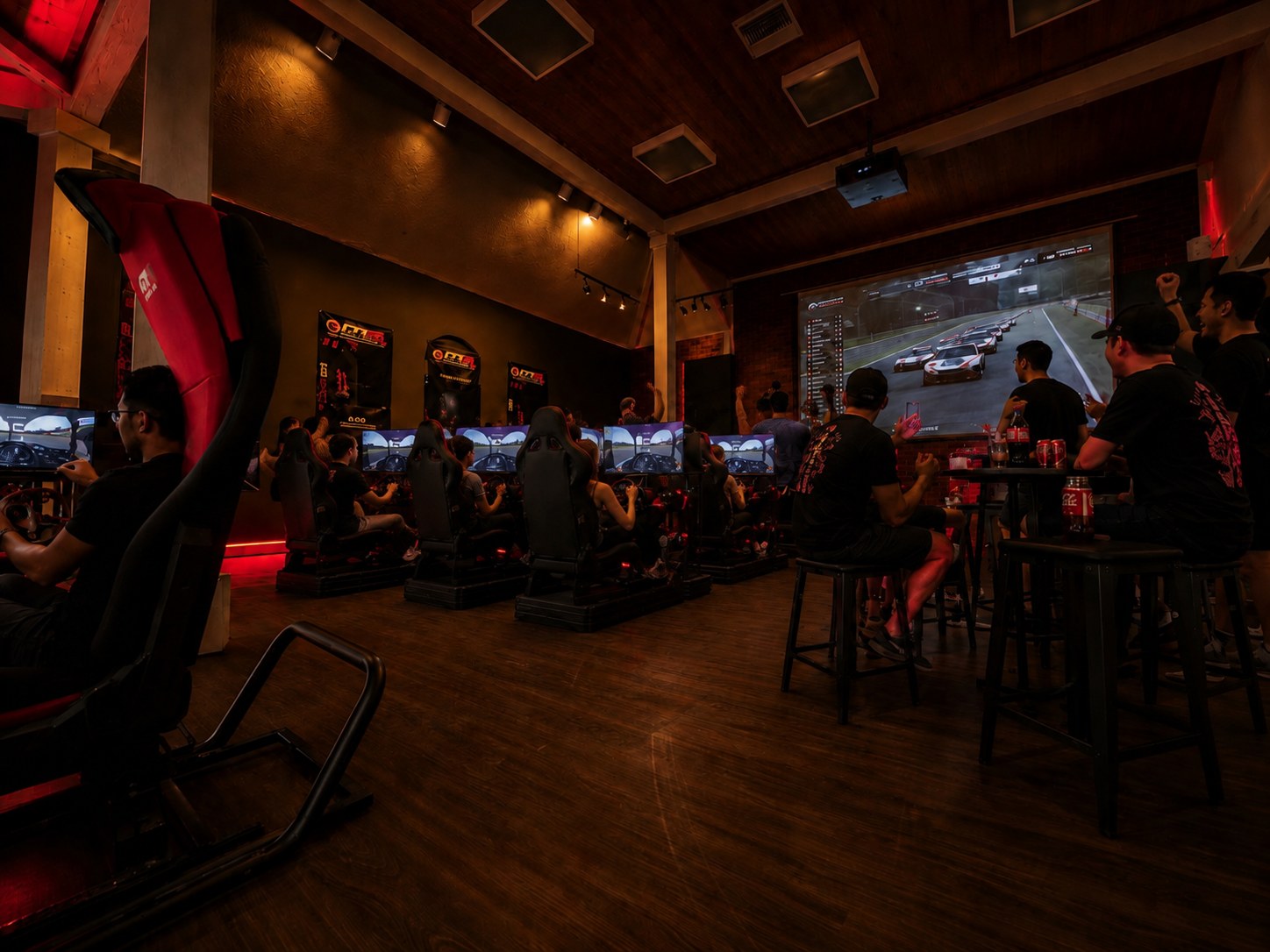
The moment you add motion to a sim rig, weak hardware gets exposed fast. Flex in the frame, pedal lift, seat wobble, and poor mounting geometry all show up the second your system starts working harder. That is why a motion ready racing simulator cockpit is not just a nicer frame - it is the foundation that decides whether your setup feels engineered or improvised.
For serious sim racers, this choice affects everything. Braking consistency, steering feedback, body position, monitor alignment, and long-session comfort all depend on the cockpit underneath the electronics. If you are investing in direct drive power, load cell pedals, triple monitors, or a future motion platform, the cockpit should be chosen like performance hardware, not furniture.
What makes a motion ready racing simulator cockpit different?
A standard sim rig might look similar at a glance, but motion readiness is about structure, mounting strength, and upgrade tolerance. A proper motion-capable frame is built to handle repeated dynamic loads without twisting, shifting, or transmitting unwanted vibration into the wrong places. That matters even if you are not installing motion on day one.
The best rigs are designed around rigidity first. When your wheel base delivers strong force feedback and your pedals demand heavy braking pressure, the cockpit should stay planted. Add motion later, and that same rigid architecture becomes even more important. A cockpit that feels acceptable in a static setup can start revealing weaknesses once actuators or motion hardware introduce movement under load.
Motion ready also means practical compatibility. Mounting points, frame geometry, seat support, accessory integration, and overall balance should allow the cockpit to grow with your system. Buyers who think long term usually end up happier than buyers who shop only for the next 30 days.
Why cockpit rigidity matters more than spec sheet hype
Sim racing buyers often focus on wheel torque, pedal sensors, and display size first. Those upgrades are exciting, but the chassis is what lets them perform as intended. If the wheel deck flexes under cornering load or the pedal plate shifts under threshold braking, the realism drops immediately. More importantly, your consistency drops with it.
A rigid cockpit gives you cleaner feedback. Instead of the frame absorbing force, the force comes through your hands and feet the way it should. That creates a more direct connection to the virtual car and makes the rig feel closer to professional equipment. For competitive drivers, that can translate into better repeatability. For enthusiasts, it simply feels right.
This is where many entry-level setups hit a wall. They work until the hardware gets serious. Once you move into direct drive, higher brake force, heavier seats, or future motion upgrades, budget compromises become obvious.
How to choose the right motion ready racing simulator cockpit
The right cockpit depends on your current hardware, your room, and how far you plan to take the build. A casual user with a compact setup has different needs than a content creator building a full triple-screen motion rig, but the buying logic stays the same.
Start with your load, not your budget
It is tempting to shop by price first, but a better starting point is total system demand. Ask what wheel base you run, how much brake pressure you use, what display setup you want, and whether motion is a realistic upgrade path. If your plan includes premium force feedback and heavy pedal inputs, the cockpit has to be ready for that from the start.
Buying too light usually costs more later. Replacing a cockpit after upgrading the rest of the rig is one of the most frustrating paths in sim racing because it forces a partial rebuild of the whole system.
Pay attention to adjustability
A high-performance cockpit should not lock you into one driving position. Seat angle, pedal distance, wheel height, and wheel reach matter more than many buyers realize. Realism is not only about force and movement - it is also about posture. If your body position is off, comfort drops and control suffers.
Adjustability also matters in shared households or multi-discipline setups. Some users want a GT driving position, others prefer a formula-inspired stance, and many want the flexibility to fine-tune over time. A cockpit with meaningful adjustment will stay useful longer.
Check mounting compatibility carefully
Universal compatibility is a major buying signal because most sim racers do not keep the same hardware forever. A cockpit should support a wide range of wheel bases, pedal sets, seats, shifters, handbrakes, monitor mounts, and accessories without turning the install into a workaround project.
This is where specialist brands have an advantage. A better-engineered ecosystem reduces guesswork, keeps upgrades cleaner, and helps the cockpit function as the center of the build instead of the part you are always trying to adapt.
Static today, motion tomorrow
A lot of buyers search for motion-ready hardware before they are actually ready to buy a motion system. That is smart. Motion platforms are a major step, and it makes sense to stage the investment. The cockpit should be able to carry the rig in a static configuration now and support higher immersion later without becoming obsolete.
That future-proofing has real value. It protects your investment, shortens your path to the next upgrade, and lets you build in layers instead of ripping everything apart. In practical terms, that means stronger frame construction, better mounting architecture, and room for accessory expansion.
Not every buyer needs motion, of course. If your priority is pure rigidity with no interest in moving actuators, you may still want a motion ready platform simply because those cockpits are usually built to a higher standard. The stronger structure improves the experience either way.
Ergonomics are part of performance
The best simulator cockpits do more than hold components in place. They put the driver in a repeatable, controlled position that supports focus and endurance. Long races, training sessions, and content creation all expose ergonomic flaws quickly. Pressure points in the seat, awkward pedal spacing, or poor wheel alignment can turn a premium setup into a tiring one.
A strong cockpit should feel planted and natural. Your arms should not be reaching too far. Your knees should not be cramped. Your braking leg should have support under heavy input. These details sound small, but they are exactly what separate casual rigs from serious simulator platforms.
That is one reason performance-minded buyers gravitate toward engineered cockpit systems instead of improvised desk-and-chair setups. The difference in body control is immediate, especially once force feedback and braking loads increase.
What serious buyers should look for
When evaluating a cockpit for long-term value, focus on frame stability, seat support, hardware compatibility, mounting precision, and adjustability. Clean integration for monitor stands, shifters, and add-ons also matters because clutter and instability can undermine an otherwise strong build.
Warranty support should not be ignored either. Premium simulation hardware is an investment, and support coverage adds confidence when you are building a larger ecosystem. For buyers moving beyond entry-level gear, that kind of practical reassurance matters just as much as the headline features.
At this level, details count. Better materials, cleaner engineering, and smarter modular design are not marketing filler - they are what keep a rig feeling sharp after months or years of use.
The cockpit is the performance platform
There is a reason experienced sim racers stop treating the cockpit like an accessory. It controls how every other part of the system feels. A powerful wheel base on a weak frame feels compromised. Great pedals on a shifting plate feel inconsistent. Even premium displays lose impact if the driving position never feels locked in.
A motion ready racing simulator cockpit brings the whole platform into alignment. It gives you the structural confidence to run harder hardware now, expand later, and push for a more authentic driving experience without second-guessing the frame underneath you. For buyers chasing ultimate realism at home, that is where the build starts to make sense.
GTR Simulator approaches this category the right way - as a complete performance platform built for realism, compatibility, and serious upgrade potential. If you are building for the long haul, choose the cockpit that is ready for the hardware you want next, not just the hardware sitting on your desk today.
The track feels a lot closer when the foundation is built like it belongs there.
Share:
Formula GT Adjustable Simulator Cockpit Guide
Sim Racing Monitor Stand Setup Done Right