

A tall driver can tell within one braking zone when a cockpit was not designed around real ergonomics. Knees crowd the wheel deck, pedals sit too close, the monitor becomes a windshield mounted in the wrong zip code, and a session meant to build consistency turns into a fight with the seating position. An adjustable sim rig for tall drivers changes that equation by giving your body the same priority as your wheel base, pedals, and display.
For drivers around 6'2" and above, fit is not a comfort upgrade. It is part of performance. A position that restricts leg extension or forces your shoulders forward can affect braking pressure, steering precision, endurance, and the ability to repeat the same inputs lap after lap. The goal is not simply finding a larger cockpit. It is finding a platform with enough adjustment range to create a controlled, race-ready driving position.
Why tall drivers need more than a longer seat rail
Seat travel is the first specification most tall buyers check, and it matters. But moving the seat rearward alone can create a new problem: the wheel and pedals may no longer remain in the correct relationship to your body. A cockpit built for serious simulation should allow the seat, pedal deck, wheel mount, and display position to work as one adjustable system.
A proper driving position begins with leg room, but it does not end there. Your knees need clearance below the wheel deck at full pedal travel. Your thighs need support without the front edge of the seat cutting into them. Your arms should retain a relaxed bend at the wheel, rather than reaching forward with locked elbows. When all of those points line up, you can apply force to the pedals and steering wheel without using your body to brace against an awkward cockpit.
This is especially important with load-cell or hydraulic-style pedal systems. Higher-performance pedals reward deliberate, repeatable brake pressure. If a tall driver is sitting too close, hips may rotate backward and the knees can rise too high. If the seat is moved back without bringing the pedal deck forward, the driver may overextend through the ankle and lose control near maximum braking force. Adjustment is what lets you tune the rig around your biomechanics instead of accepting a compromise.
The key adjustments in a sim rig for tall drivers
The best adjustable sim rig for tall drivers provides usable range in the areas that affect driving posture most. Look beyond broad claims of adjustability and consider how each component moves, how securely it locks in place, and whether changing one element creates a problem somewhere else.
Seat position and backrest angle
A sliding seat is valuable, but the seat itself matters just as much. A fixed-back racing seat can provide excellent support under braking and cornering forces, provided it has the right width and mounting options. A reclining seat offers more flexibility for shared use, long training sessions, or a cockpit that also supports flight simulation.
Tall drivers should pay close attention to seat depth and the location of the mounting brackets. Some seats sit high or position the driver too far forward before the rails have even been adjusted. Side-mounted configurations often offer more control over height, rake, and fore-aft placement than a simple bottom-mounted setup. The ideal backrest angle depends on the type of car you are recreating, but a slightly reclined position should still keep your hips stable and your shoulders supported.
Pedal deck reach, height, and angle
Pedal adjustment is where a cockpit becomes a performance platform. Tall drivers often need the pedal deck farther forward, but a flat deck with limited mounting points may still leave the pedals at the wrong angle. The pedal face should meet your foot naturally through the full range of travel, particularly at the brake.
A deck that adjusts for distance, height, and inclination helps create a more natural ankle position. This matters when you are trail braking, managing threshold braking, or spending extended sessions learning consistent pressure application. For very tall drivers, confirm that the pedal assembly can move forward independently rather than relying entirely on a rearward seat position.
Also consider heel support. If your heels constantly slide, or if the pedals sit at an angle that leaves your feet unsupported, precision suffers. A stable heel plate and a rigid pedal deck give you a better foundation for every input.
Wheel deck height and reach
A wheel set too low places unnecessary load on the shoulders. A wheel set too high can force the elbows outward and reduce comfort during longer sessions. For many drivers, the wheel rim should sit roughly around upper-chest height, with a comfortable bend in the elbows when hands are placed at a natural driving position.
Tall drivers often need more wheel-deck reach adjustment than expected. Once the seat and pedals are positioned correctly, the wheel must come to the driver. Avoid solving a long reach by sitting closer to the pedals or leaning forward from the seatback. A cockpit with adjustable wheel height, angle, and fore-aft travel makes it far easier to establish a posture that stays consistent under pressure.
Direct-drive wheel bases add another consideration: mounting strength. High-torque hardware can expose flex in a poorly supported wheel deck, especially when the driver is pulling against the wheel to compensate for an incorrect position. A rigid chassis and secure mounting system preserve the feedback your wheel base is designed to deliver.
Monitor or VR placement
Display placement is often treated as an afterthought, even though it affects immersion and visual reference points. When a tall driver moves the seat back, a fixed monitor stand can leave the screen too far away. That can make it harder to judge braking markers, apexes, and closing speed.
With a monitor setup, aim to place the screen close enough to fill your intended field of view without forcing your eyes or neck to work. The center of the display should generally be near eye level, adjusted for your preferred seating angle and the type of car being simulated. Triple-monitor users need enough stand adjustment to maintain proper alignment across all three panels after changing the cockpit position.
VR eliminates monitor distance as a concern, but it does not eliminate ergonomics. A correctly fitted rig remains essential because virtual reality makes poor body positioning even more obvious. If your knees meet the wheel deck or your elbows are locked, immersion will not hide it.
Measure yourself before you choose a cockpit
Height is a useful starting point, but inseam, torso length, shoulder width, and shoe size often tell a more complete story. Two drivers who are both 6'4" can need very different positions. One may have longer legs and require significant pedal reach. Another may have a longer torso and need a higher wheel deck and different screen placement.
Before buying, take a few practical measurements in a chair that approximates your intended driving posture. Measure from your lower back to the pedal position you find comfortable, then compare that distance with the rig's usable seat and pedal adjustment range. Consider your footwear too. Racing shoes have a smaller profile than everyday sneakers, and larger shoes need adequate clearance between pedals.
If the cockpit will be shared, map out the tallest and shortest regular users. A rig that fits one tall driver perfectly but takes twenty minutes to reconfigure for everyone else may not be the right choice for a household or team environment. Independent adjustment at the seat, pedals, and wheel is far more practical than a design where every change requires rebuilding the entire setup.
Do not confuse a large frame with a flexible platform
A physically large cockpit can still be restrictive. Some frames provide plenty of exterior length but limited pedal travel, a fixed wheel deck, or seat mounts that only work within a narrow range. Conversely, a well-engineered aluminum-profile or modular fixed cockpit may offer enough adjustment for a wide range of drivers without taking over the room.
The trade-off is clear. Foldable cockpits can be an intelligent answer for limited space, but tall drivers using powerful direct-drive hardware or high-force pedals should carefully assess chassis stiffness, adjustment range, and the time required to set up a repeatable position. A fixed rig generally provides the strongest foundation for intensive driver development, future upgrades, motion compatibility, and consistent calibration.
At GTR Simulator, the right approach is to build the cockpit as an ecosystem, not as a seat with accessories attached. Your wheel base, pedal set, display configuration, shifter, handbrake, and possible motion system should all fit the chassis without forcing compromises in your primary driving position.
Test the position like a driver, not a shopper
Once the cockpit is assembled, do not judge fit after five minutes of cruising. Run a proper test session. Use a circuit with heavy braking zones, repeated direction changes, and enough laps to reveal pressure points. Pay attention to whether you are pushing yourself back in the seat under braking, reaching for the wheel in fast corners, or shifting your hips to find pedal leverage.
A useful fit check includes four questions:
- Can you press the brake firmly while keeping your back supported by the seat?
- Do your knees clear the wheel deck and mounting hardware at full pedal travel?
- Can you hold the wheel with relaxed shoulders and bent elbows?
- Can you see your visual references without craning your neck or leaning forward?
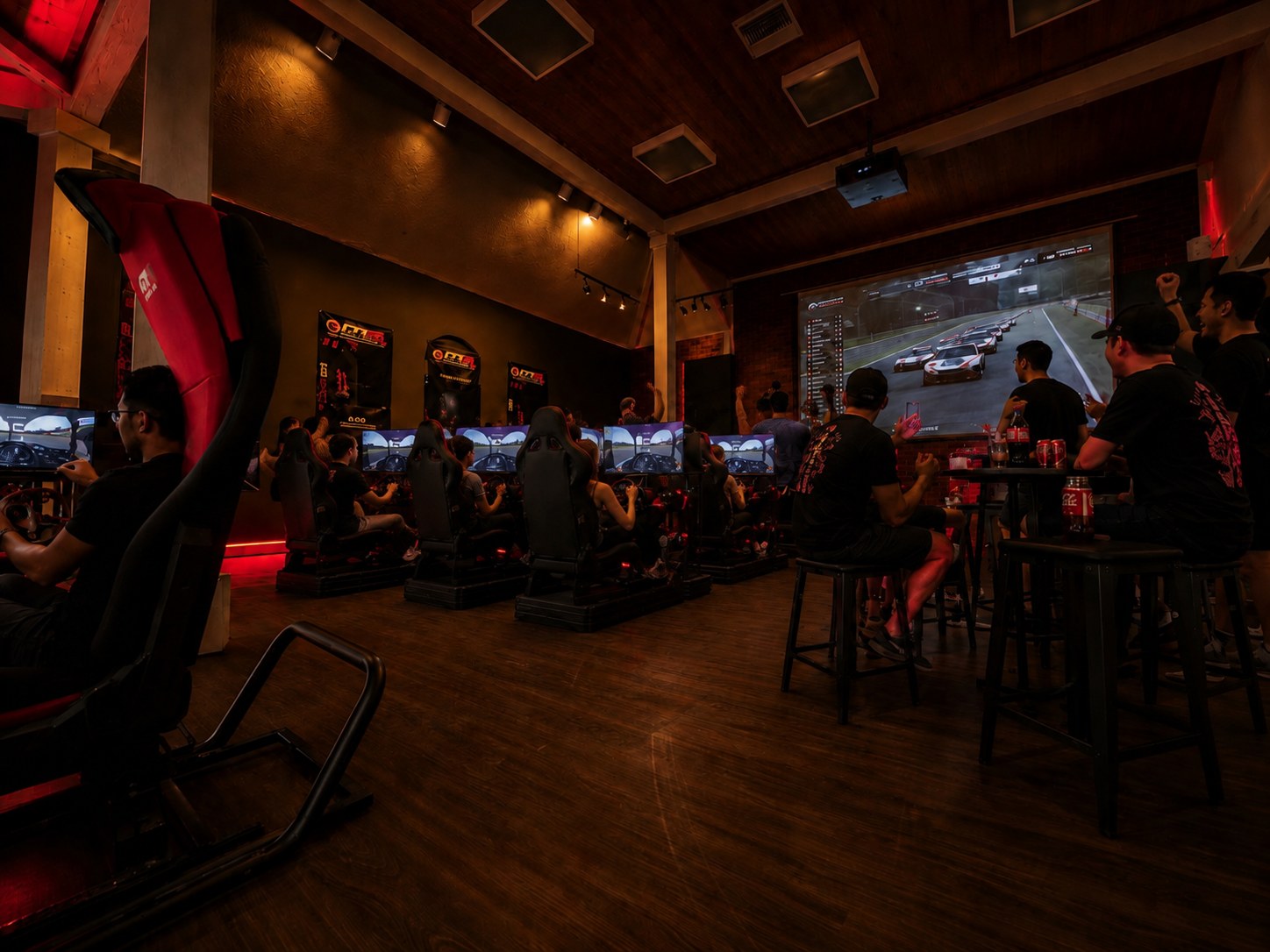
For Southern California drivers who want to validate fit before investing in a home system, a hands-on session at the GTR Simulator Experience & Training Center in Ontario can provide useful reference for a professional-grade seating position. The feeling of a properly adjusted rig is immediate: your body stops negotiating with the hardware, and your attention returns to braking, vision, and car control.
A tall driver should never have to choose between immersion and proper posture. Choose a cockpit with meaningful adjustment, set it up with the patience you would bring to a real race car, and let every session reinforce the skills you came to build.
Share:
Saleen Racing Simulator Cockpit Guide
Portable Racing Simulator Setup That Performs