

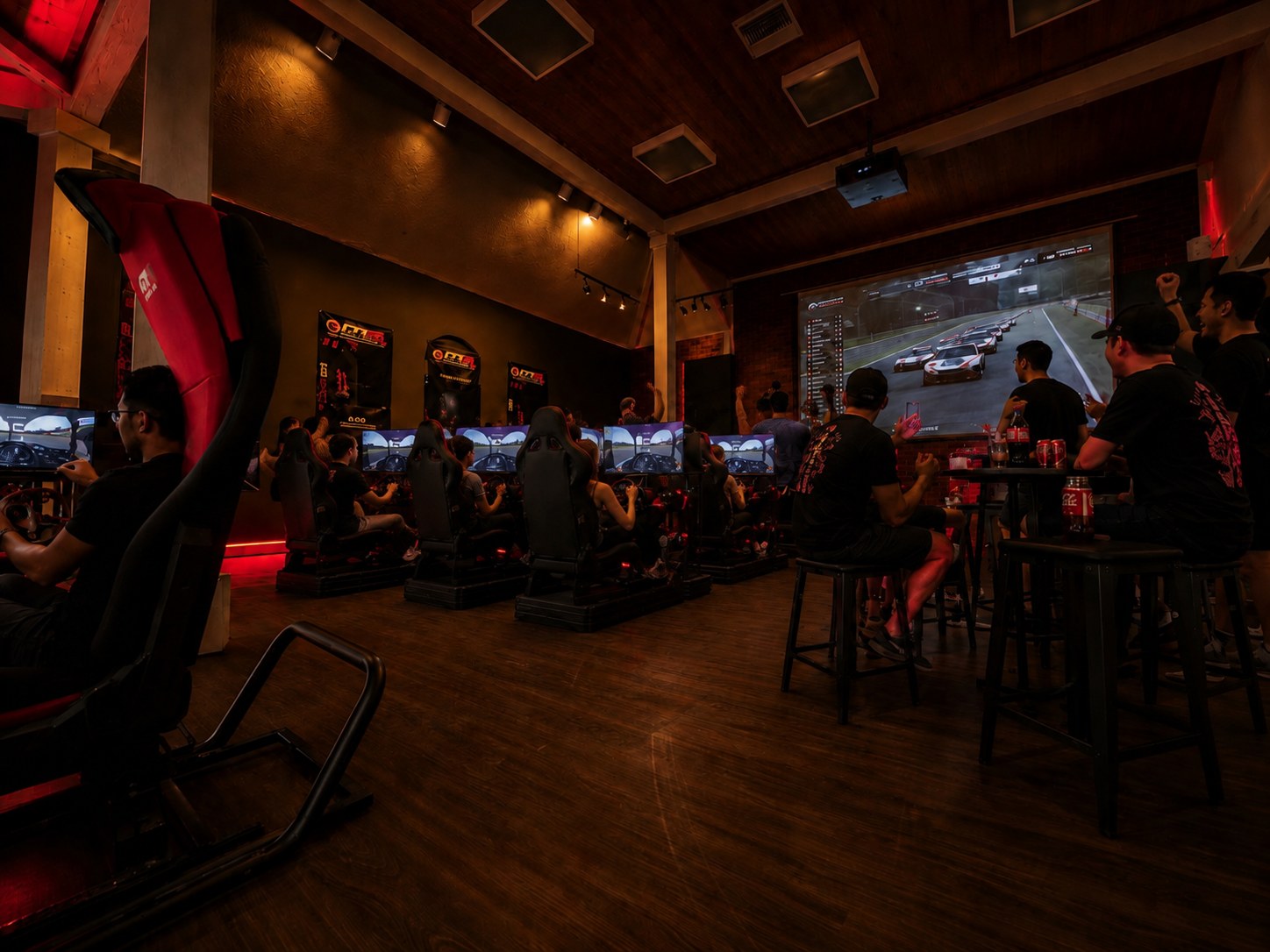
A weak cockpit will expose itself the first time you lean hard on the brake pedal. The frame flexes, the wheel deck moves, your seating position shifts, and suddenly your focus is on the hardware instead of the lap. A proper sim racing cockpit guide starts there - not with looks, but with stability, ergonomics, and how closely your rig can support real driver inputs.
If your goal is immersion, consistency, and skill development, the cockpit is the foundation. Wheel bases get the attention, pedals win the specs race, and displays drive the wow factor, but the chassis decides how all of it performs together. The right cockpit does more than hold components. It creates a repeatable driving position, controls flex under load, and gives every upgrade a serious platform to work from.
Why a sim racing cockpit matters more than most buyers expect
Many first-time buyers shop cockpit last. That usually changes after they experience load cell pedals on a light frame or mount a stronger wheel base to a setup that was never built for that kind of torque. The result is lost precision, extra fatigue, and a rig that limits the hardware instead of supporting it.
A rigid cockpit improves more than comfort. It helps braking consistency because your pedal position stays fixed. It improves steering confidence because the wheel base remains planted when force feedback spikes. It also helps endurance. A poor seating angle can feel acceptable for fifteen minutes and become a problem over a full race stint.
For beginners, that means fewer bad habits. For experienced drivers, it means cleaner inputs and better repeatability. For anyone investing in premium simulation hardware, it protects the value of the full system.
Sim racing cockpit guide: start with your driving goals
The best cockpit is not automatically the biggest or most expensive one. It depends on how you drive, what hardware you plan to use, and how permanent you want the setup to be.
If you are building a dedicated simulator room, a fixed cockpit usually makes the most sense. It gives you better structural rigidity, more mounting options, and a cleaner path for future upgrades like integrated monitor stands, motion systems, higher-end pedal sets, or direct drive wheel bases. A fixed platform is the right choice when realism and expansion matter more than portability.
If space is tight, a foldable cockpit can still be a smart entry point, especially if it is engineered for actual simulator use rather than treated like a temporary accessory. The trade-off is simple. You gain convenience, but you may give up some rigidity, upgrade headroom, or adjustment range compared to a heavier permanent chassis.
That trade-off is not always a dealbreaker. For some buyers, getting into a disciplined training setup that can be stored between sessions is far better than waiting indefinitely for the perfect room.
Decide how serious your wheel and pedals will be
This is where many purchases go wrong. Buyers choose a cockpit for current hardware, then upgrade six months later and outgrow the frame.
A belt-driven or gear-driven wheel with basic pedals puts far less stress on a rig than a direct drive wheel base paired with load cell or hydraulic-style braking. Once braking force climbs and wheel torque increases, cockpit quality stops being a nice bonus and becomes a performance requirement.
If you already know you want stronger force feedback, stiffer pedal resistance, or a more professional seating position, buy for the next stage, not just the current one. A cockpit with universal compatibility and a modular design gives you a much better long-term result than replacing the chassis every time the rest of the system improves.
What separates a serious cockpit from a compromise
The most important difference is structural integrity. A serious cockpit is built to resist torsional flex under braking and steering load. That usually comes from stronger frame construction, better mounting architecture, and more precise adjustability across the wheel deck, pedal tray, and seat position.
Material choice matters, but design matters more. A well-engineered frame with reinforced mounting points and practical adjustability will outperform a flashy rig that only looks aggressive. Premium simulation is not about cosmetics first. It is about whether the platform holds alignment when you are pushing at the limit.
Seat fit is another major factor. A cockpit can be rigid and still feel wrong if the seat angle, height, and distance do not support your body properly. Drivers often focus on wheel position and forget that hip angle, knee bend, and pedal reach influence both comfort and input quality. If your seat is too upright for GT-style driving or too cramped for longer sessions, you will compensate with your hands and feet.
That compensation shows up in lap times and fatigue.
Adjustability is not a luxury
A proper cockpit should let you dial in wheel height, wheel distance, pedal angle, pedal distance, and seating position with enough precision to fit your body and driving discipline. GT, formula-style, and hybrid seating positions all place different demands on the rig.
This matters even more if the simulator will be shared by multiple users. Without meaningful adjustment, a premium rig becomes a one-person machine. With it, the same cockpit can support family members, training clients, or different drivers in a home or studio environment.
Monitor stand, display choice, and immersion
Cockpit buying gets more complicated once displays enter the picture. A single monitor setup can work well for many users, especially if budget or room size is limited. Triple monitors increase peripheral awareness and make the driving environment feel more natural, but they also require more space, stronger mounting solutions, and a system that can hold alignment over time.
Integrated monitor stands can create a cleaner footprint, but separate stands often isolate screen vibration from the chassis. That becomes more relevant with stronger wheel bases or motion add-ons. VR is another path entirely. It can deliver outstanding immersion, but it also depends on personal comfort, PC performance, and how much convenience matters in your routine.
There is no universal winner here. The right answer depends on whether your priority is visual realism, compact packaging, easier setup, or future expansion.
Think in systems, not standalone parts
The strongest buyers approach simulator building as an ecosystem. The cockpit, seat, wheel mount, pedal tray, display solution, and accessories all affect one another. That is why compatibility should be treated as a first-order decision, not an afterthought.
A cockpit with universal mounting support gives you more freedom across wheel bases, pedals, shifters, handbrakes, and display options. It also reduces the frustration of chasing adapters, drilling custom holes, or discovering that your preferred upgrade path does not fit the frame.
This is where direct-to-consumer simulator specialists often have an edge. They understand how complete systems behave in the real world, not just in product photos. GTR Simulator, for example, builds around the idea that realism comes from how every component works together under load, across long sessions, and through future upgrades.
Should you buy entry-level or invest once?
There is no single right answer, but there is a right answer for your timeline.
If you are still testing commitment, an accessible cockpit with real adjustability and upgrade compatibility can be a smart move. It gets you into structured practice without overspending on day one. But if you already know this will become a long-term simulator, buying too low can cost more in the end. Replacing a flex-prone frame after upgrading pedals and wheel base is a frustrating kind of false economy.
The better question is not, "What can I spend today?" It is, "What kind of simulator am I building over the next two years?"
That mindset usually leads to better hardware choices.
A practical sim racing cockpit guide for final decision-making
Before you buy, picture a full session, not a showroom image. How easy is it to get in and out? Can the cockpit hold your current hardware without movement? Does it have the adjustment range for your ideal seating position? Will it support stronger pedals, a direct drive base, a monitor stand, or accessories later on?
Then consider your environment. A dedicated room supports a different solution than a shared office or living space. Storage matters. Floor space matters. So does noise and how permanent you want the installation to feel.
And if you are unsure what premium simulation should actually feel like, hands-on experience can shorten the learning curve fast. Trying a professional-grade setup before buying helps you understand rigidity, seating geometry, pedal pressure, and display placement in a way product specs never fully can. That kind of firsthand comparison is especially valuable for buyers near Southern California who want to test serious equipment before building at home.
The right cockpit should feel less like furniture and more like a driving platform engineered around control. When your body is supported, your hardware stays planted, and your upgrades still have room to grow, every session gets closer to the standard serious drivers are actually chasing.
Share:
Direct Drive vs Belt Wheel: Which Wins?
Best Home Flight Training Equipment Setup