

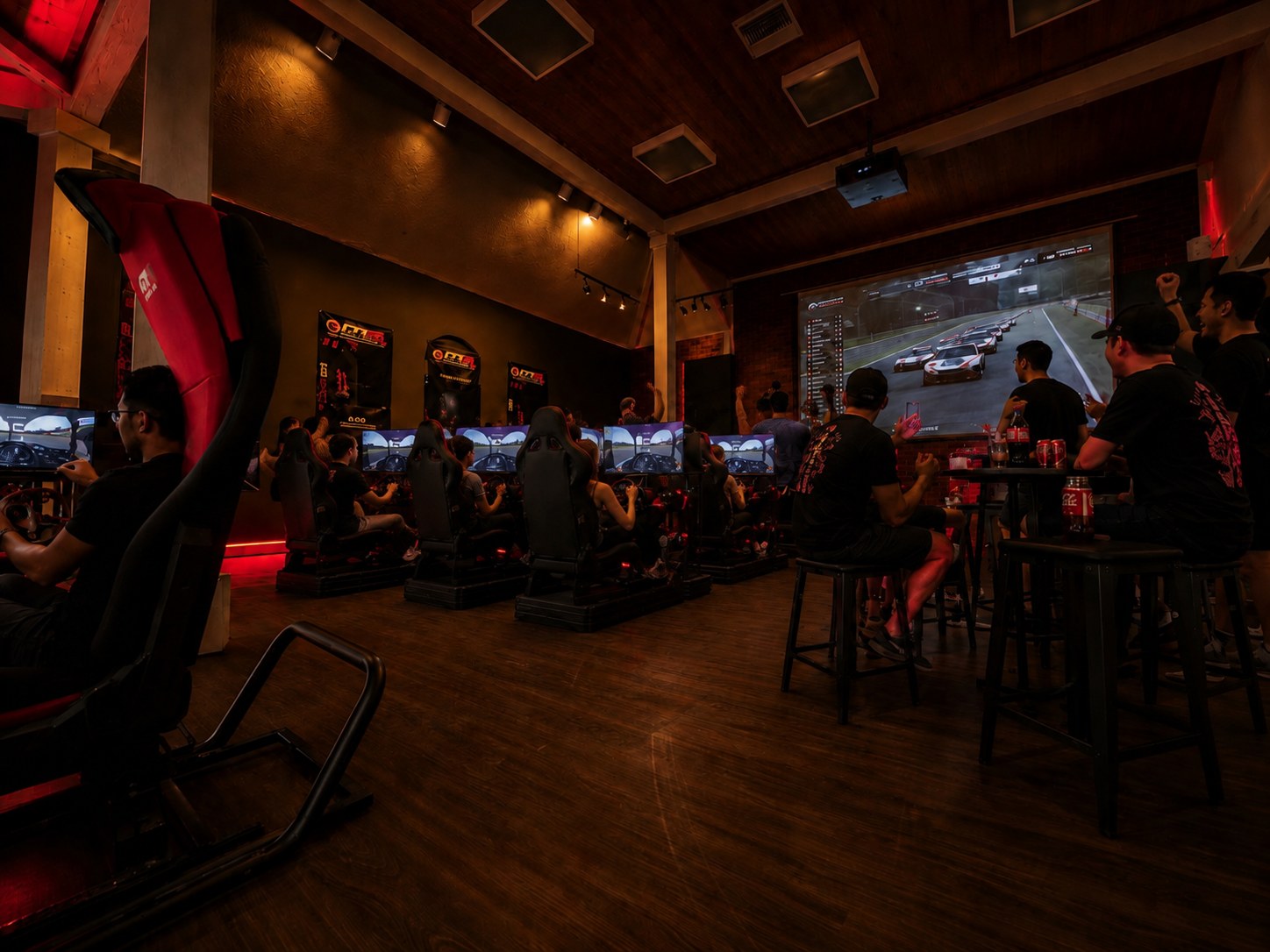
The difference between a toy setup and a professional racing simulator for home shows up the first time you hit the brakes hard into a corner. If the cockpit flexes, the pedals shift, or the wheel loses detail under load, the illusion breaks fast. A serious home rig is built to keep that from happening. It gives you the stability, ergonomics, and hardware headroom to train harder, race longer, and feel more of what the car is doing.
That matters whether you are chasing lap time, building content, running endurance stints, or finally replacing a shaky starter stand with something worthy of your hardware. The best home systems do more than look aggressive. They create a controlled, repeatable driving position and support the kind of components that make sim racing feel legitimate.
What makes a professional racing simulator for home
A professional setup is not defined by price alone. It is defined by how well every part works together under pressure. The cockpit needs to stay rigid during heavy braking and fast direction changes. The wheel base needs enough torque and fidelity to communicate grip loss, curb strikes, and load transfer without feeling numb or exaggerated. The pedals need to support precise modulation, especially if you are running a load cell brake.
Displays and audio matter too, but they come after the driving foundation. A triple-monitor layout or VR headset can add major immersion, yet neither fixes a weak mounting system or poor seating position. If the rig moves, rattles, or forces you into an awkward posture, performance suffers before immersion even enters the conversation.
This is why a true pro-grade home simulator is usually modular. It needs to support different wheel bases, steering wheels, pedal sets, shifters, handbrakes, monitor configurations, and future upgrades. You may start with a solid direct drive system and add motion later. Or begin with a racing-focused cockpit and expand into a complete ecosystem around it. The point is long-term capability, not a one-box shortcut that limits your next move.
The cockpit is the foundation
If you are shopping for a professional racing simulator for home, start with the cockpit. This is the structural core of the entire system, and it influences everything from comfort to consistency. A rigid frame keeps your hardware aligned and lets force feedback and braking forces translate cleanly through the chassis instead of disappearing into flex.
Seat position is just as critical. Inconsistent ergonomics create fatigue, and fatigue creates mistakes. A proper cockpit should offer meaningful adjustment in seat angle, wheel distance, pedal placement, and driver fit. That is especially important if the simulator will be shared by more than one person or used for multiple disciplines, from GT and formula driving to drifting.
Portability is where trade-offs come in. Foldable cockpits are excellent for space-conscious users who still want far more stability than a casual wheel stand can provide. Fixed cockpits, on the other hand, are the right move when maximum rigidity and upgrade capacity matter more than storage. Neither option is universally better. It depends on your room, your hardware, and how committed you are to a permanent sim space.
Choosing the right wheel base and controls
A lot of buyers jump straight to torque numbers, but the better question is how the wheel base behaves over a full race session. Smoothness, detail, thermal consistency, and compatibility matter as much as raw power. A direct drive wheel base is the benchmark for serious users because it delivers stronger, cleaner feedback and removes the vague, mechanical feel common in lower-end systems.
Steering wheel selection should match the cars you actually drive. A round wheel makes sense for rally, drifting, and road cars. A formula or GT-style wheel can improve control mapping and immersion for circuit racing. Pedals deserve equal attention. If your braking is inconsistent, your lap times will be inconsistent. That is why experienced sim racers invest in pedal sets with better resistance, adjustability, and repeatable feel.
Shifters and handbrakes are not mandatory for every build, but they matter a lot for the right use case. Rally, drifting, and vintage racing all benefit from dedicated controls. The good news is that a premium cockpit should be ready for those additions without improvised mounting or awkward compromises.
Displays, VR, and the realism question
There are two common paths here: multi-monitor and VR. Triple monitors remain a favorite for competitive drivers because they offer strong peripheral visibility, stable image quality, and an easier path for long sessions. They also work exceptionally well for streaming, recording, and shared viewing.
VR can deliver a dramatic sense of presence. Depth perception improves, the cockpit feels life-sized, and corner entry can feel more intuitive. But it is not perfect for everyone. Some users experience fatigue or heat buildup in longer sessions, and hardware demands are higher. If you want the most practical all-around setup, triples often win. If you want maximum immersion and you tolerate headsets well, VR can be a game changer.
Monitor stands should not be an afterthought. The screen position affects eye line, comfort, and how convincing the driving environment feels. A dedicated stand also helps isolate displays from cockpit vibration, which is especially useful if you plan to add higher-force hardware or motion compatibility later.
Why compatibility matters more than hype
One of the biggest mistakes in sim building is buying impressive individual parts that do not integrate well. A professional-level home setup should support a wide range of peripherals without forcing you into a dead end. Universal compatibility across wheel bases, pedals, seats, displays, and accessories gives you room to evolve your rig instead of replacing it.
That matters because sim racers rarely stop at version one. They upgrade pedals, switch wheel ecosystems, add a handbrake, move to triples, or invest in a stronger PC. A cockpit and support structure built around compatibility protects that investment. It also saves you from the frustration of adapters, custom drilling, or unstable mounting solutions that undermine premium hardware.
This is where specialist brands separate themselves from generic gaming furniture. Engineering, tested fitment, and real-world use by experienced drivers produce a different result than products designed mostly for appearance. A serious rig has to survive repeated load, aggressive inputs, and years of changes.
Building for your space and your goals
Not every buyer needs a full flagship setup on day one. The right build depends on what you race, how often you drive, how much room you have, and how much realism you expect. A compact but rigid cockpit with a quality wheel and pedal set may be the sweet spot for one user. Another may need a complete turnkey system with triple monitors, a gaming PC, integrated stands, and room for motion-ready upgrades.
Content creators often need visual impact and camera-friendly layouts. Esports competitors usually care more about consistency, adjustability, and long-session comfort. Motorsport fans stepping up from entry gear often want one thing above all else: a rig that finally feels planted. That is the leap that changes sim racing from casual entertainment into focused practice.
There is also a long-term value argument. Cheap rigs are expensive when they force replacement after one hardware upgrade. A better chassis, stronger mounts, and wider compatibility cost more up front, but they tend to age much better. For buyers serious about performance, that is usually the smarter spend.
The best home simulator feels complete
A professional racing simulator for home should not feel like a pile of parts. It should feel like a system. The seat, chassis, controls, displays, and accessories should all support one outcome: believable, repeatable driving with zero distractions.
That is the standard serious buyers should expect. Premium simulation is not just about visual style or one headline feature. It is about engineering, adjustability, and realism that holds up every time you sit down to drive. Brands built around full simulator ecosystems, including GTR Simulator, have an advantage here because they can support the entire path from cockpit to controls to display setup without leaving the customer to guess what fits what.
If you want the track to come to your house, build the kind of rig that respects the details. The right simulator does not just make racing more exciting. It makes every input cleaner, every session more immersive, and every upgrade feel like it belongs.
Share:
Racing Simulator Buying Guide for Realism
Turnkey Racing Simulator Systems Explained