

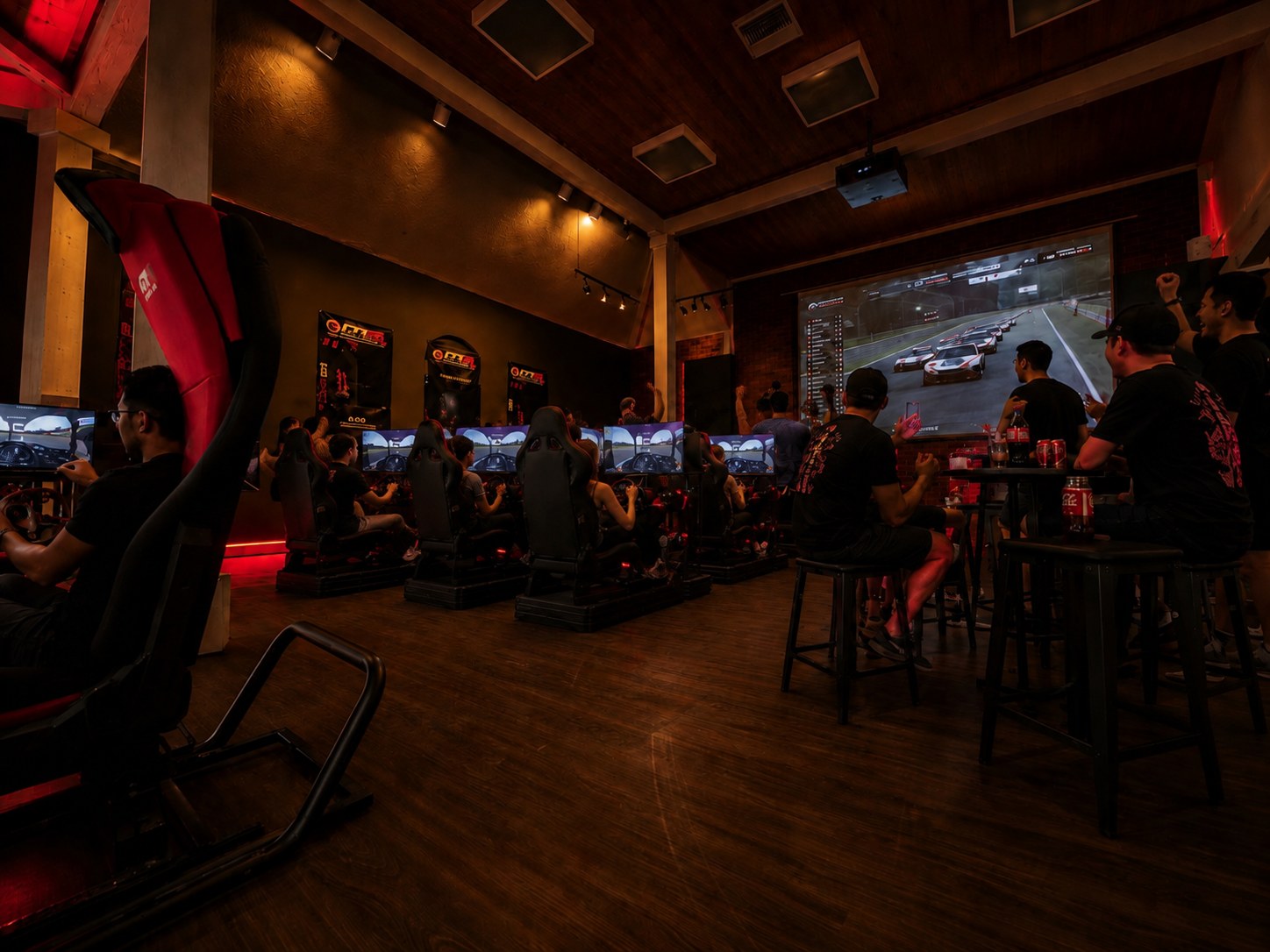
You feel the difference almost immediately. The first time you brake hard into a corner on a real cockpit instead of a wobbly desk setup, a racing simulator stops feeling like a game accessory and starts feeling like performance equipment. That shift matters, because the best sim rigs are not built around hype. They are built around control, repeatability, immersion, and the kind of realism that keeps you driving longer and improving faster.
What a racing simulator really needs to deliver
A strong racing simulator is not just a wheel and pedals connected to a screen. It is a complete driving environment where every component supports the others. The cockpit has to stay planted under load. The seating position has to let you drive consistently without fatigue. The wheel base, pedals, shifter, handbrake, monitor stand, PC, and display all need to work together without turning your setup into a compatibility puzzle.
That is where many buyers get burned. Entry-level gear can be fun, but fun and realism are not always the same thing. A flexible frame can dull force feedback. Weak pedal mounting can ruin threshold braking. Poor adjustability can make even premium hardware feel wrong. If your goal is an authentic track-inspired experience at home, the foundation matters as much as the electronics.
Why cockpit design matters more than most people expect
The cockpit is the backbone of the entire experience. If the frame shifts when you countersteer or stand on the brake pedal, the simulator is feeding you mixed signals. You are not just losing immersion. You are losing confidence in what the car is doing.
A fixed cockpit usually makes the most sense for drivers chasing maximum rigidity and long-session comfort. These rigs are built to handle stronger wheel bases, heavier pedal pressure, and expanded accessories without flexing under load. If you are planning to upgrade over time, a rigid frame gives you room to grow rather than forcing a full reset later.
A foldable cockpit has a different job. It gives you a way to bring serious hardware into a shared space without permanently dedicating a room to sim racing. The trade-off is simple: portability is valuable, but absolute rigidity is harder to achieve in a compact design. For many home users, that trade is worth it. The key is choosing a foldable platform that still prioritizes structural stability and practical adjustability.
The real difference between entry-level and premium setups
A lot of buyers look at a racing simulator and focus first on visible hardware. Bigger wheel. Better screen. Stronger wheel base. Those upgrades matter, but premium performance usually shows up in less glamorous places first.
Pedal feel is one of them. Better pedals give you more believable resistance, more precise modulation, and more confidence under braking. That translates directly to lap time consistency. Seat support is another. A proper bucket-style seat or well-designed simulator seat keeps your posture stable during longer sessions, which helps you react faster and drive more naturally.
Then there is adjustability. Premium rigs tend to offer more control over wheel distance, pedal angle, seating position, and accessory placement. That sounds small until you spend two hours driving. A setup that fits your body correctly feels faster, cleaner, and far less tiring.
Racing simulator compatibility is not a side issue
Compatibility is one of the biggest factors in long-term value, and it gets overlooked all the time. A cockpit should not trap you into one brand or one upgrade path. If you are adding a different wheel base later, swapping pedals, or mounting a handbrake and shifter, the platform should be ready for it.
That is why universal mounting support and modular hardware design are not just nice extras. They protect your investment. A good cockpit should adapt to your driving style, your room, and your future plans. The same goes for monitor stands, PC trays, keyboard mounts, and motion-ready accessories. If the ecosystem is too limited, even a strong starting setup can feel restrictive after a few months.
For serious enthusiasts, this is where a specialist brand earns attention. GTR Simulator has built its reputation around modular systems, broad compatibility, and professional-grade realism, which matters when you want a simulator that can start strong and keep evolving.
Displays, VR, and the immersion question
Visual setup changes the character of a racing simulator more than many buyers expect. A single monitor can still be excellent if it is positioned correctly and paired with a strong field of view. Triple monitors add lateral awareness and make wheel-to-wheel racing feel much more natural. VR goes even further by changing depth perception and cockpit presence in a way flat screens still struggle to match.
But there is no single right answer. Triple screens give you stable visuals and easy accessibility for streaming, competitive racing, and longer sessions. VR can deliver stronger immersion, yet it demands more from your PC and may not suit everyone’s comfort level. If your priority is pure presence, VR is compelling. If your priority is endurance, convenience, and multi-use functionality, monitors often win.
The best path depends on how you drive. Competitive racers may care more about visual consistency and clear peripheral references. Casual enthusiasts may want the most dramatic sense of being inside the car. Content creators may value screen-based setups for easier capture and audience engagement.
Performance starts with ergonomics
A racing simulator should not only look aggressive. It should fit like real equipment. Good ergonomics are what turn a cool setup into a repeatable training tool.
Your knees, hips, shoulders, and hands all need to sit in a natural position. If the wheel is too high, the pedals too flat, or the seat too upright, fatigue shows up fast. So does bad technique. What feels acceptable for twenty minutes starts to feel like a compromise over a full race stint.
That is why adjustability is one of the smartest places to spend money. Sliding seat travel, pedal plate adjustment, wheel deck positioning, and accessory mounting flexibility all give you a better chance of building a proper driving posture. This is especially important if more than one person uses the rig, or if you switch between racing disciplines like GT, drifting, and formula-style driving.
What to prioritize if you are building in stages
Not everyone buys a full simulator in one shot, and that is fine. A staged build can be a smart move if you choose the right order. The first priority should usually be the cockpit. A stable platform improves every other component you add later. After that, pedals often make a bigger difference to driving quality than people expect, especially once you start chasing cleaner braking and better car control.
Wheel bases and steering wheels are exciting upgrades, but they shine most when the rest of the rig can support them. The same goes for monitors, PCs, and accessories. A racing simulator becomes more convincing when the system is balanced. Overspending in one category while neglecting the foundation usually leads to frustration.
Bundled systems can make a lot of sense here. They remove guesswork, reduce fitment risk, and give you a more coherent setup from day one. For buyers who want less trial and error, that convenience is worth real money.
Who actually benefits most from a premium racing simulator
A premium simulator is not only for esports drivers or track-day veterans. It also makes sense for enthusiasts who are tired of replacing flimsy gear, for creators who need a clean and impressive on-camera setup, and for home users who want immersive entertainment that feels engineered rather than improvised.
The biggest difference is not just speed. It is confidence. When the cockpit stays planted, the controls feel connected, and the geometry fits your body, you stop fighting the hardware. You focus on driving. That is the point where simulation starts to deliver what people are really paying for - realism that feels credible enough to keep coming back to.
There is still an it-depends factor. If you race casually once a month, a simpler setup may be enough. If you are building a long-term rig, training regularly, or want a system that can handle upgrades without compromise, premium hardware becomes the smarter buy.
A racing simulator is at its best when it disappears beneath you and leaves only the drive. Choose the setup that fits your space, your ambition, and your standards, and the track comes home in a way a basic setup never can.
Share:
FAA Certified Flight Simulator Package Guide
Professional Racing Simulator for Home