

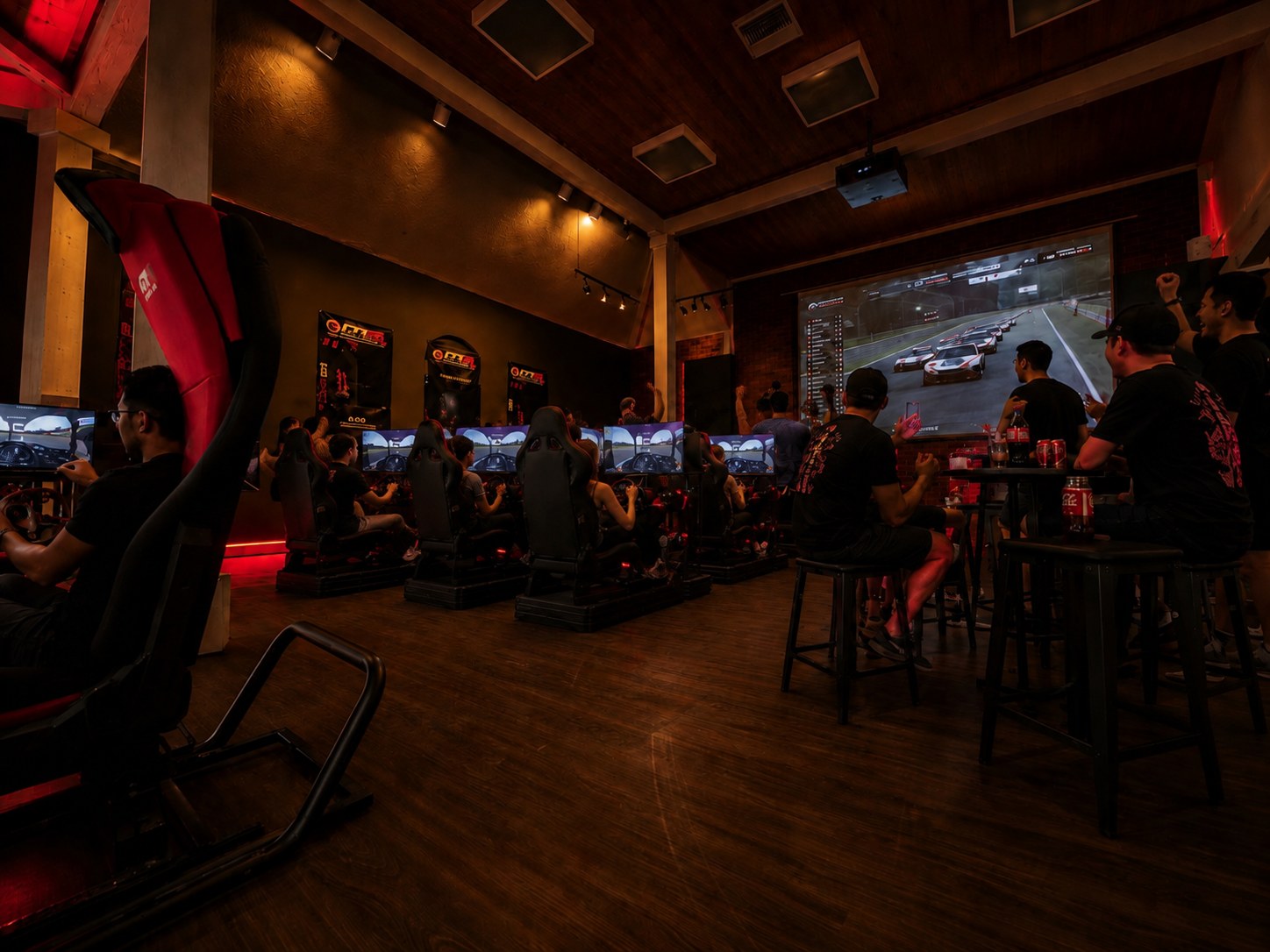
A fast lap starts before the green flag. If your wheel flexes under load, your pedals slide across the floor, or your monitor sits in the wrong place, you are not just losing immersion - you are fighting your own hardware. That is why learning how to build racing simulator hardware the right way matters. A serious setup should feel planted, adjustable, and ready to grow with your pace.
The biggest mistake new builders make is shopping component by component without a plan. They buy a powerful wheel base first, then discover their desk cannot handle the torque. Or they add load cell pedals to a lightweight stand and end up chasing stability problems instead of apexes. A better approach is to build from the foundation up, with realism, compatibility, and ergonomics leading every decision.
How to build racing simulator from the ground up
Start with the cockpit, not the wheel. The cockpit is the chassis of your entire sim racing experience. If it flexes, everything attached to it feels less precise. A rigid frame also gives you better consistency under braking, cleaner force feedback, and a more realistic driving position.
For some drivers, a foldable cockpit makes sense. If space is tight and the rig needs to move between rooms or tuck away after a session, portability matters. The trade-off is that compact designs usually leave less room for heavy future upgrades like motion systems, oversized displays, or the strongest direct drive wheel bases. If you know you want a long-term platform, a fixed cockpit is usually the smarter performance choice.
Seat position matters more than most first-time buyers expect. A proper racing seat should support you under braking and cornering forces while keeping your arms and legs in a controlled, repeatable position. Too upright and the setup feels unnatural. Too reclined and your pedal control suffers. Adjustability is not just a convenience feature - it is part of lap-time consistency.
Choose the right wheel base, wheel, and pedals
Once the cockpit is sorted, move to the controls. This is where realism starts to become physical. The right wheel base, steering wheel, and pedal set should work as a system, not as random parts collected from different wish lists.
Wheel bases generally fall into gear-driven, belt-driven, and direct drive categories. Gear-driven options are budget-friendly but can feel notchy and less refined. Belt-driven systems are smoother and quieter, making them a solid middle ground. Direct drive is where premium simulation steps into professional territory. It delivers faster response, stronger detail, and a much more convincing transfer of road texture, grip loss, and weight shift.
That said, more torque is not automatically better. If you are building your first serious rig, a mid-range direct drive setup can be the sweet spot. It gives you the precision and strength that make sim racing come alive without demanding a heavy-duty mount beyond what your cockpit can handle. The strongest wheel bases are impressive, but only if the rest of the rig is engineered to match.
Pedals deserve the same level of attention. Many buyers obsess over wheel specs and then settle for entry-level pedals. That usually hurts performance more than it saves money. A load cell brake is one of the most meaningful upgrades in sim racing because it lets you brake based on pressure instead of pedal travel. That feels closer to real motorsport and helps build muscle memory that translates into more repeatable braking zones.
If your focus is circuit racing, a stiff, adjustable pedal set is a high-value investment. If you split time between road cars, drifting, and casual driving, you may want a more forgiving setup. It depends on how serious your driving goals are and whether realism or versatility comes first.
Displays, PC power, and immersion
A strong driving position with premium controls gets you halfway there. The other half is visual immersion and system performance. If the image stutters or your field of view feels cramped, the illusion breaks fast.
Single monitors are the simplest starting point and can still deliver a strong experience, especially with a properly placed ultrawide. Triple monitors create a much more natural sense of speed and peripheral awareness. For wheel-to-wheel racing, triples are hard to beat because they let you judge corner entry and side-by-side positioning with more confidence. The trade-off is space, cost, and GPU demand.
VR can be extraordinary when it works for your space and preferences. Depth perception in VR changes how corners feel and can make the cockpit disappear in the best way. But not every driver wants a headset on for long sessions, and not every PC is ready to run modern sim titles at the level VR deserves. Comfort, heat, and visual clarity all matter here.
That leads to the PC. Sim racing rewards stable performance more than flashy benchmark numbers. You want a machine that can maintain smooth frame rates across your preferred sim titles, whether that means iRacing, Assetto Corsa Competizione, rFactor 2, or a wider mix of racing and flight software. If you are planning triples or VR, build extra headroom into your graphics and processing power from day one. Underbuilding the PC is one of the fastest ways to bottleneck an otherwise premium simulator.
How to build racing simulator ergonomics that last
A simulator can look impressive and still be tiring to use. Ergonomics are where a good rig becomes a long-session rig. Your elbows should stay slightly bent, your wrists should rest naturally on the wheel, and your knees should hold a comfortable angle without forcing your hips into an awkward position.
Monitor height is part of ergonomics too. The center of your display should align naturally with your sightline so you are not constantly looking too far up or down. Triple monitor stands should be stable and adjustable, especially if you want to dial in precise angles around the cockpit. A clean field of view creates more realism, but it also reduces fatigue.
Cable management may not sound exciting, but it separates a polished build from a frustrating one. Loose cables can interfere with pedal travel, motion hardware, seat movement, and peripheral swapping. A clean layout also makes future upgrades faster, whether you are adding a handbrake, shifter, button box, or flight controls.
Audio is another underestimated piece of immersion. A quality headset or speaker setup helps communicate tire scrub, curb strikes, engine load, and environmental cues that matter on track. You do not need a studio-grade system to feel the benefit, but weak audio leaves performance feedback on the table.
Build for compatibility, then build for upgrades
The smartest racing simulator builds are modular. Your first version does not need to be your final version, but it should give you a clean upgrade path. That means choosing a cockpit with mounting flexibility, hardware with broad platform support, and accessories that make sense together.
This is where complete ecosystems have a real advantage. Instead of forcing together parts with questionable fitment, you can start with hardware designed around universal compatibility, adjustability, and expansion. For buyers who want confidence from the first purchase, a bundled approach often saves time, reduces setup friction, and avoids the expensive lesson of buying twice.
At GTR Simulator, that philosophy is central to the product ladder. You can start with a serious home cockpit and build toward a more advanced system with upgraded wheel bases, pedals, monitor stands, motion-ready components, and accessories that preserve realism as your standards rise. For a lot of enthusiasts, that is the difference between a temporary gaming rig and a real simulator platform.
Budget still matters, of course. If you are working within a fixed number, spend on the cockpit and pedals before chasing extreme wheel torque or oversized displays. A rigid platform with strong braking feel will usually improve the driving experience more than a flashy spec sheet. Once the core is right, visual and peripheral upgrades become much more rewarding.
One more consideration is your intended use. If this setup is for occasional fun, a compact and efficient build may be ideal. If you are training seriously, streaming content, competing online, or using the rig as a centerpiece of your gaming room, it makes sense to invest in premium realism from the start. The track really can come to your house, but only if the hardware is engineered to carry that promise.
The best simulator is not the most expensive one. It is the one that feels stable under pressure, fits your space, supports your goals, and leaves room to go faster tomorrow than you are today.
Share:
Turnkey Racing Simulator Systems Explained
How to Choose a Sim Cockpit