

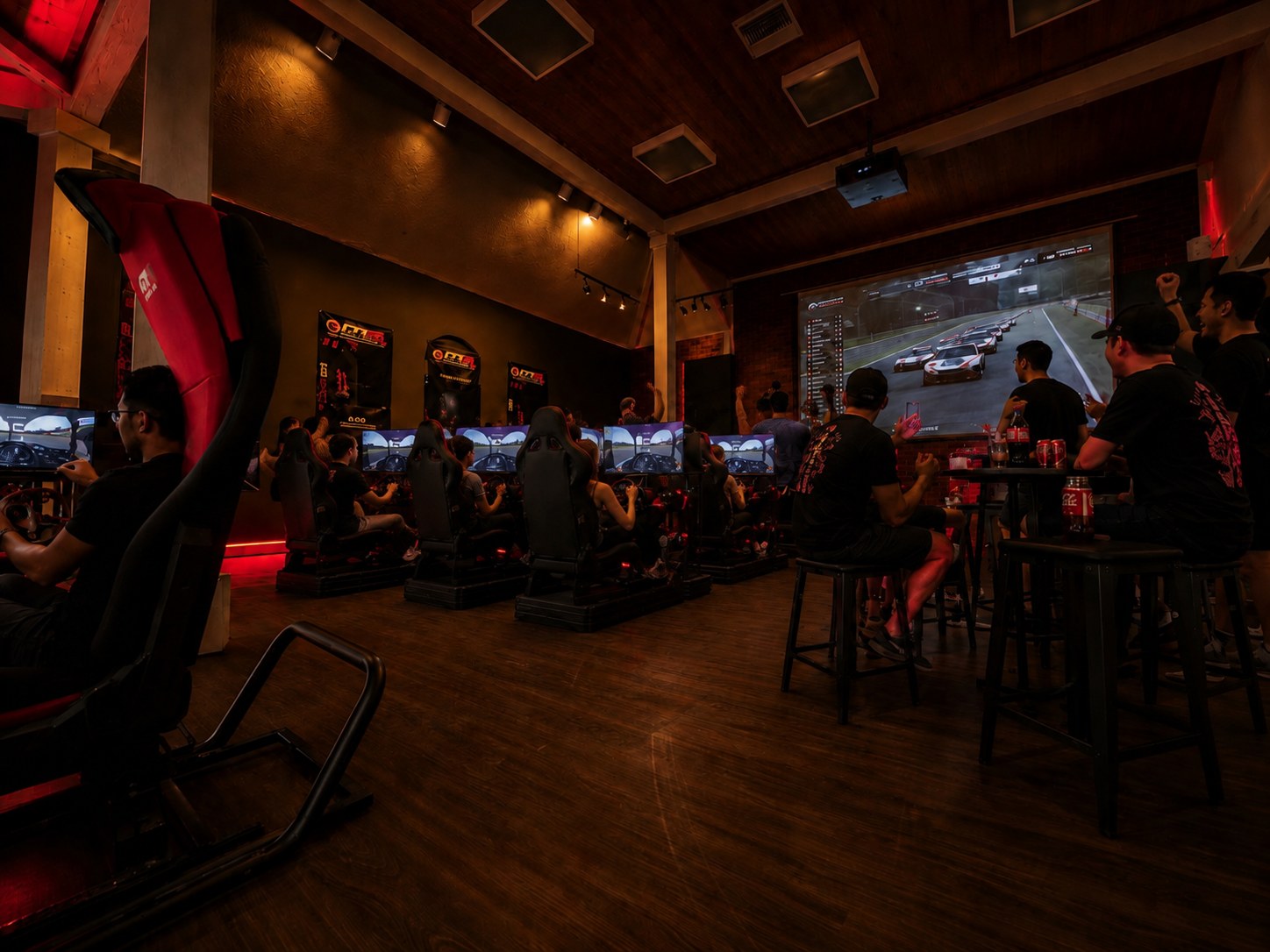
The moment your wheel is bolted to a flimsy desk, your pedals start sliding, and your chair rolls backward under braking, the fantasy breaks. A racing simulator bundle with seat fixes that fast. It turns scattered gear into a real driving position, a stable platform, and a setup that lets you focus on pace instead of fighting your hardware.
For serious sim racers, that difference is not cosmetic. The seat angle changes how long you can drive without fatigue. The cockpit frame affects steering precision under load. The pedal mount influences braking consistency, especially once you step into load cell pedals or stronger wheel bases. If you want the track to come to your house, the bundle matters as much as the electronics.
Why a racing simulator bundle with seat changes everything
A complete bundle solves three problems at once: ergonomics, rigidity, and compatibility. That combination is what separates a casual gaming setup from a proper simulator environment.
Ergonomics come first because comfort is performance. If your knees are too high, your back is unsupported, or your wheel sits too far away, you will notice it long before a long session ends. A well-designed racing seat and adjustable cockpit let you lock in a driving position that feels planted and repeatable. That matters for sprint races, endurance runs, and every session where muscle memory is part of your pace.
Rigidity is the second major factor. Strong force feedback can expose weak frames immediately. Flex in the wheel deck, pedal plate, or seat mount softens what the hardware is trying to tell you. Instead of crisp steering detail and confidence under trail braking, you get movement where there should be feedback. A properly engineered simulator bundle gives your wheel and pedals a stable foundation, which is exactly what pro-level immersion demands.
Compatibility is where many buyers either save money or waste it. A good bundle should work with a wide range of wheel bases, steering wheels, and pedals. That flexibility protects your investment. You might start with a gear-driven wheel or entry pedals, then move up later to direct drive and a heavier pedal set. The right cockpit and seat should grow with you instead of forcing a full rebuild.
What to look for in a racing simulator bundle with seat
The seat gets most of the visual attention, but the smartest buyers look at the whole system. Frame construction, adjustability, mounting options, and expansion paths all matter.
Start with the chassis. Steel construction is usually the benchmark for durability and long-term stability. A rigid frame handles stronger hardware better and feels more planted during aggressive inputs. If you know you want a direct drive wheel eventually, buy with that future in mind now. A cheap cockpit can feel acceptable with an entry wheel, then become the weak link the moment torque goes up.
Next, look at adjustability. You want room to fine-tune wheel height, pedal distance, pedal angle, and seat position. This is especially important if the simulator will be shared by multiple drivers or if you switch between GT, road car, and formula-style preferences. More adjustment usually means better comfort, but there is a trade-off. Some highly adjustable designs take longer to set up, and not every buyer needs race-team-level tuning. It depends on how often you change hardware or driving position.
The seat itself should support longer sessions without becoming a distraction. Side bolstering helps keep you planted, but there is a balance. A highly aggressive seat can feel authentic and supportive, yet it may be less comfortable for larger users or casual mixed-use gaming. Padding, width, and recline range all affect the experience. If you are racing often, choose a seat built for repeat use, not just showroom appeal.
Mounting support is another major checkpoint. Your bundle should accommodate mainstream wheel and pedal ecosystems and ideally leave room for accessories like shifter mounts, monitor stands, keyboard trays, and motion-ready expansion. This is where specialist simulator brands stand apart. They design around the reality that sim racers upgrade over time.
Complete bundle or build it piece by piece?
There is no universal answer, but for most enthusiasts, a bundle is the stronger move. Buying a complete system simplifies fitment, assembly, and compatibility. You spend less time researching bolt patterns and less time wondering whether your seat, cockpit, and hardware were meant to work together.
The piece-by-piece route can make sense if you already own premium controls or want a very specific driving position. Advanced users sometimes prefer that path because they know exactly which seat style, mount type, or chassis geometry they want. The downside is obvious: more decisions, more risk, and more chances for mismatch.
For committed beginners and upgrading hobbyists, a racing simulator bundle with seat is usually the smarter entry into serious sim racing. It creates a stronger baseline from day one and leaves fewer weak points in the system.
Entry-level, mid-range, or premium?
This is where expectations matter. Entry-level bundles are about getting off the desk and into a dedicated cockpit. They can deliver a major improvement in immersion and consistency without demanding a huge investment. If your current setup is a rolling office chair and a clamp-on wheel, even a modest cockpit bundle can feel like a technological breakthrough.
Mid-range bundles are often the sweet spot. This is where you start seeing stronger frames, better adjustability, and seats that are built for more serious use. For many sim racers, this is the category that offers the best balance between price and long-term value. It is serious enough for competitive driving and content creation, while still accessible enough for a home setup.
Premium bundles are about maximum realism, hardware headroom, and a cleaner path to a professional-grade simulator environment. If you are running direct drive, load cell or hydraulic pedals, triple monitors, or motion-compatible hardware, premium construction becomes less of a luxury and more of a requirement. You are not just buying comfort. You are buying stability under stress and confidence that your rig can keep up with your ambition.
The hidden value is in long-term ownership
A lot of buyers focus on the first-week experience. Smart buyers look at year two. That is where a quality simulator bundle proves its value.
A good cockpit and seat can outlast multiple wheel and pedal upgrades. That makes the bundle one of the most important foundation purchases in your setup. Instead of replacing a weak frame every time your hardware gets better, you keep building on a stable platform. That is more cost-effective, and it creates a cleaner ownership experience.
Support and warranty matter here too. Sim hardware is an enthusiast category, but it still needs practical confidence behind it. Clear assembly resources, protected purchasing, and real product support reduce risk. For a premium buyer, those details are not secondary. They are part of the package.
Who should buy one now?
If you race more than occasionally, the answer is probably yes. A bundle makes immediate sense for hobbyists chasing consistency, content creators who want a cleaner and more immersive camera-ready setup, and esports-minded drivers who need repeatable ergonomics.
It also makes sense for buyers who are tired of fragmented gear. If your current setup feels like a compromise between living room furniture and racing hardware, a dedicated cockpit with seat is the upgrade that changes the entire experience. It is one of the few purchases in sim racing that improves comfort, immersion, control, and visual presentation all at once.
For households with limited space, the decision depends on form factor. A foldable or more compact rig may be the better fit, even if it gives up some ultimate rigidity compared with a full fixed cockpit. For dedicated sim rooms, heavier fixed-frame bundles are usually the stronger choice because they leave more room for future expansion and deliver a more planted feel.
GTR Simulator has built its reputation around that exact idea: giving enthusiasts a professional-grade path from home setup to serious simulator ecosystem, with the compatibility, adjustability, and performance-focused design that real drivers actually use.
The best bundle is not the one with the flashiest seat or the longest feature list. It is the one that matches your space, your hardware goals, and the way you actually race. Get that part right, and every lap after that feels more connected, more consistent, and a lot closer to the real thing.
Share:
Best Sim Racing Cockpit for Home Buyers
Direct Drive Wheel Stand Compatible Cockpit