

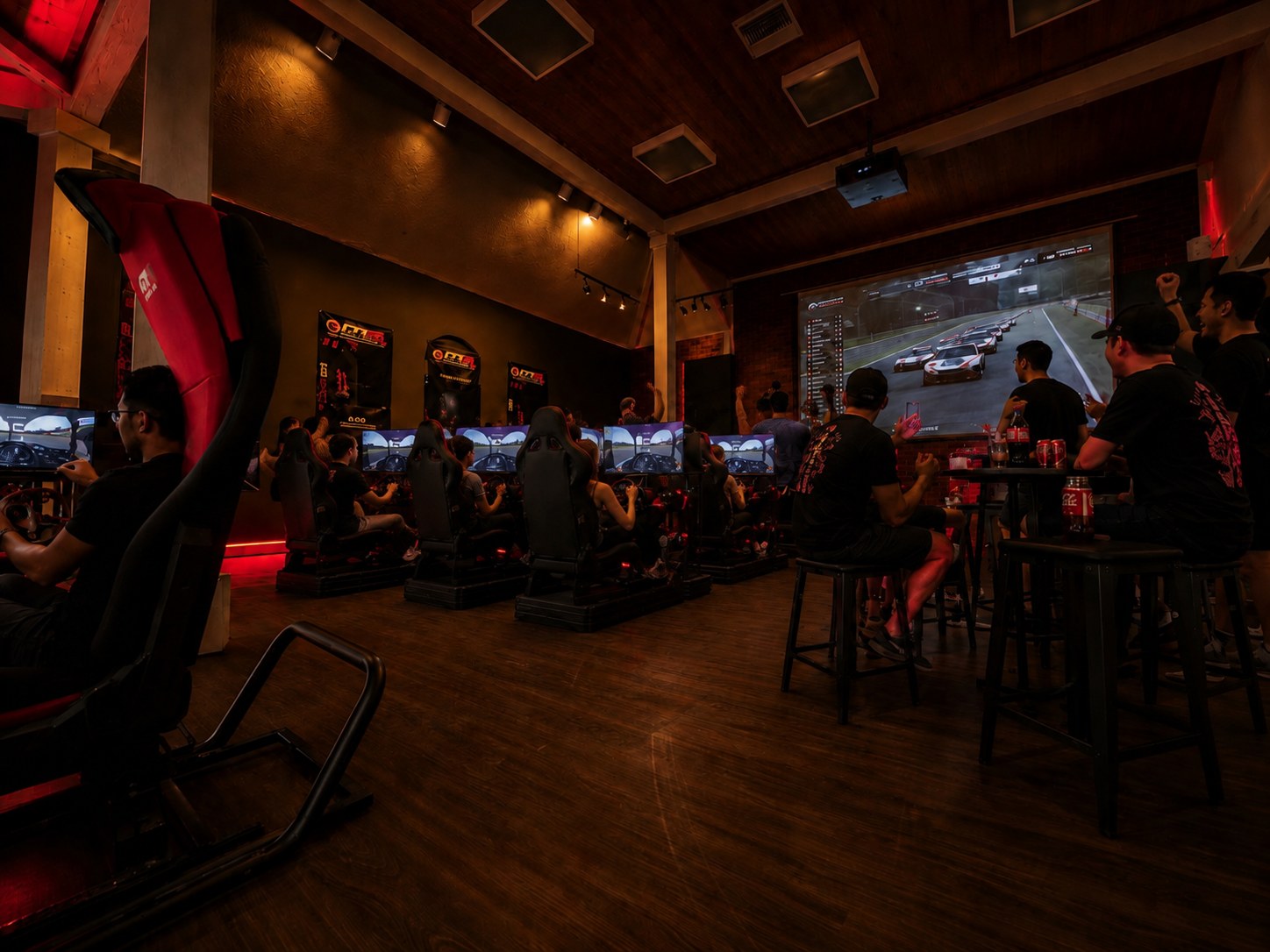
A bad small-room setup usually fails in the same place - not on lap one, but when your knees hit the desk, the pedals slide, and the wheel flexes right when you start pushing harder. A true sim racing cockpit for small space use has to do more than fit. It has to stay planted, keep your driving position consistent, and leave room to actually live in the room when the session is over.
That changes the buying criteria. In a large dedicated sim room, you can prioritize footprint last. In an apartment, bedroom, office, or shared gaming space, footprint becomes part of performance. If the rig is awkward to enter, impossible to move, or too bulky for your monitor and seating layout, it will get used less often no matter how good the specs look on paper.
What makes a sim racing cockpit for small space actually work
The first mistake most buyers make is focusing only on folded dimensions or total length. Those numbers matter, but the real issue is operating footprint. You need space for seat position, pedal extension, elbow clearance, and monitor distance. A cockpit that technically fits against a wall can still feel cramped once you sit down and start racing.
The second factor is rigidity per inch. Smaller rigs do not get a free pass on stability. If anything, they need stronger engineering because compact frames often place wheel and pedal loads closer together. Under braking or with a stronger wheel base, weak construction shows up fast as deck flex, steering movement, and noise through the frame. That kills realism and makes consistency harder when you are trying to build muscle memory.
Adjustability matters just as much. In a small room, a cockpit often has to serve more than one role. It may need to move between a monitor and a TV, fit multiple drivers, or tuck away when not in use. A compact frame with limited pedal angle, shallow wheel adjustment, or a fixed seating position can force compromises that make long sessions uncomfortable. A smaller footprint should not mean a smaller setup window for ergonomics.
Fixed or foldable sim racing cockpit for small space setups
This is where the right answer depends on your hardware and how often the cockpit needs to disappear.
A foldable cockpit is the practical choice when the room has to do double duty. If you race in a home office, bedroom, apartment living room, or content creation space, being able to reduce the rig’s footprint after a session is a real advantage. A good foldable design saves time, lowers setup friction, and makes it easier to commit to racing more often. The track comes to your house, but it does not have to take over the entire room.
The trade-off is load capacity and ultimate rigidity. Some foldable models are excellent with mainstream wheel and pedal sets, but once you move into heavier load cell braking or stronger direct drive torque, the frame design has to be far more serious. If portability is the priority, be honest about your current hardware and your upgrade path over the next year, not just the next month.
A fixed compact cockpit makes more sense if the setup will stay assembled and ready. That usually delivers better structural confidence, more adjustment range, and cleaner cable management. For serious enthusiasts building toward professional-grade immersion, a fixed rig in a carefully measured corner often outperforms a larger folding option that still needs to be moved around. Compact does not have to mean temporary.
The dimensions that matter more than product photos
Photos are deceptive. Wide-angle product images make almost every cockpit look room-friendly. The smarter approach is to measure your usable zone and work backward from your body position.
Start with overall length, but then pay attention to pedal reach at your preferred seat position. Taller drivers can turn a compact rig into a long rig very quickly. Next, check wheel mount height and depth adjustment. If the wheel sits too high or too far away, your shoulders and wrists will tell you long before your spec sheet does.
Side clearance matters too. In a small space, the cockpit may sit near a wall, desk, bed, or shelving unit. That affects entry, exit, and shifter placement. A rig that fits on paper but leaves no room to get in smoothly becomes frustrating fast. Add monitor stand depth if you are running triples or a dedicated screen. Even a single monitor can demand more front clearance than buyers expect.
Why small-space buyers should care about compatibility
A compact cockpit should not lock you into entry-level hardware forever. That is a major difference between a smart purchase and a short-term workaround.
Universal compatibility with wheel bases, pedals, shifters, handbrakes, and monitor options matters because sim racing rarely stays static. Most enthusiasts upgrade in stages. Maybe you start with a belt-driven wheel, then move to direct drive. Maybe you add a load cell pedal set, a handbrake, or a more serious seat. A small-footprint cockpit that cannot evolve becomes more expensive in the long run because you end up replacing the whole foundation instead of upgrading around it.
This is where premium engineering earns its place. A cockpit designed for modular assembly and broader hardware compatibility gives you more headroom without demanding a giant room. That is especially valuable for racers who want a cleaner path from casual weekend sessions to a more competitive setup.
Ergonomics are not optional in a compact rig
Small-space setups often push people into poor posture because they assume saving room means accepting compromise. That is the wrong move. If your brake leg is cramped, your wheel angle is off, or your seat position forces tension into your back and shoulders, consistency drops. So does session length.
A high-performance cockpit should let you set wheel height, pedal distance, and seating angle with enough precision to replicate a real driving position. The point is not just comfort. It is control. Better ergonomics improve braking repeatability, steering accuracy, and endurance when you are running longer races or training seriously.
Look for adjustability that works in real life, not just on a product page. Fast and practical adjustment is valuable if the rig is shared between drivers or moved between display setups. The best compact cockpits make those changes without turning every session into a rebuild.
How to choose the right sim racing cockpit for small space needs
The best buying decision starts with your room, then your hardware, then your ambition level.
If space is extremely limited and the rig must be stored regularly, prioritize a foldable cockpit with proven stability, efficient locking points, and compatibility with your current wheel and pedals. This type of setup is ideal for newcomers, apartment racers, and players who want strong immersion without dedicating a full room.
If the cockpit can stay out full time, even in a tight corner, focus on a compact fixed frame with stronger rigidity and more upgrade potential. That gives you a better platform for load cell pedals, stronger wheel bases, and future add-ons without wasting floor space.
If you are already thinking about direct drive, heavy braking forces, or content creation, do not underspec the frame just because the room is small. A weak rig in a small room is still a weak rig. The smart move is choosing a compact cockpit that feels engineered, not improvised.
For buyers who want professional-grade realism in a home-friendly footprint, GTR Simulator sits in the sweet spot between performance and practicality. The right cockpit should feel like a serious piece of motorsport equipment, not a folding chair with a wheel mount attached.
The real trade-off is convenience versus commitment
There is no single best answer for every driver. A foldable cockpit wins on storage and flexibility. A fixed compact rig wins on rigidity and long-term performance. What matters is whether your cockpit matches the way you actually race.
If you run a few sessions a week and need your room back immediately, convenience is performance because a setup that is easy to deploy gets used. If you are chasing lap time, building muscle memory, and upgrading hardware step by step, commitment to a stronger fixed platform usually pays off faster.
The right small-space rig does not feel like a compromise once you are strapped in. It feels deliberate. It gives you a stable driving position, room-aware design, and the confidence to push harder without fighting your hardware. Measure carefully, think beyond the first purchase, and choose a cockpit that earns its place every time you sit down to race.
Share:
Direct Drive Wheel Stand Compatible Cockpit
Formula GT Adjustable Simulator Cockpit Guide